


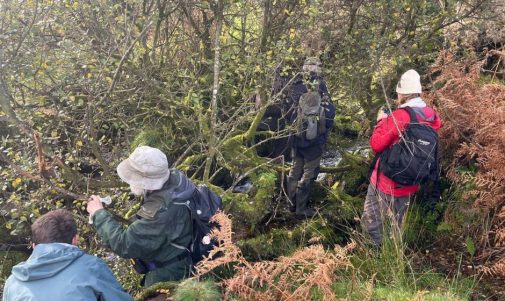
Dartmoor is home to a vast array of rare and fascinating plants, from ancient oak woodlands to creeping heather and bilberry, but some of its tiniest plants might be the most fascinating of all. Bryophytes are non flowering plants which include hornworts, liverworts and mosses, that have adapted to thrive in a broad range of environments. Although they can be found almost everywhere, from lawns to sand dunes, they do particularly well in Devon’s mild and wet climate, with around two thirds of the 1,100 UK species of bryophytes present in the county.
Despite being small, these plants play an important role within Dartmoor’s environment. They hold water after rainfall, absorb carbon and help in the creation of peat bogs, which in turn offer vital habitat for microorganisms and other specialist plants. Being sensitive to air and water pollution, they’re also an indicator of a healthy environment, with a diverse selection of healthy bryophytes suggesting that the surrounding habitat is in good condition.
Key habitats for bryophytes include acidic peat bogs, mires and temperate rainforests, all of which can be found on Dartmoor. On DPA owned land at High House Waste we have a mosaic of these types of habitat and we’re working with our Ecologist, Albert Knott, to preserve and enhance biodiversity. Gaining a clear understanding of the type and spread of bryophytes we have present helps us to make decisions about land management, including in our humid Atlantic oak woodland, which provides ideal conditions for scarce oceanic bryophytes.
In 2024 Sharon Pilkington BSc (Hons) MSc CEnv MCIEEM Botanist, Bryologist and Vegetation Ecologist undertook a survey and condition assessment of Dendles Wood Site of Special Scientific Interest (SSSI) which includes most of the woody element in the river Yealm catchment. The SSSI has several owners, including Natural England (Dendles Wood), the Dartmoor National Park Authority and South-West Water, who own small sections of watercourse and associated land. The catchment of the River Yealm above Dendles Wood is undesignated moorland, owned by the DNPA (Hawns and Dendles Waste) and part of the SSSI is also made up of High House Waste, owned by the Dartmoor Preservation Association.
The survey recorded 150 taxa (species, subspecies and varieties) of bryophyte, 128 of which were within Dendles Wood SSSI. This tally confirms the whole SSSI area as a highly diverse site in south-west England for bryophytes.
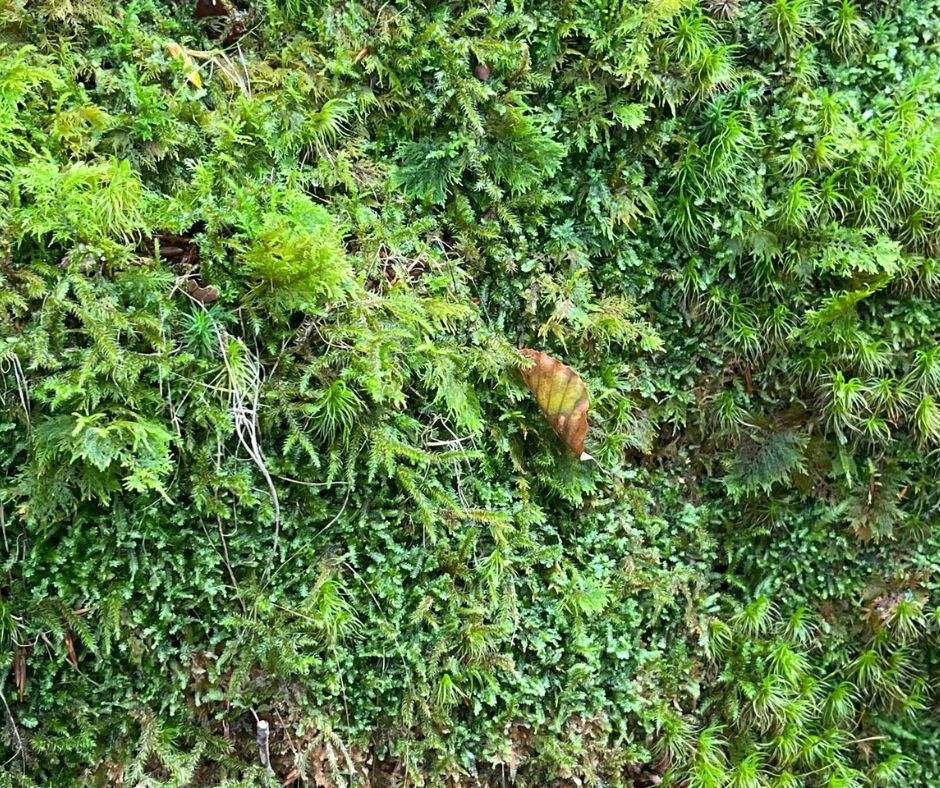
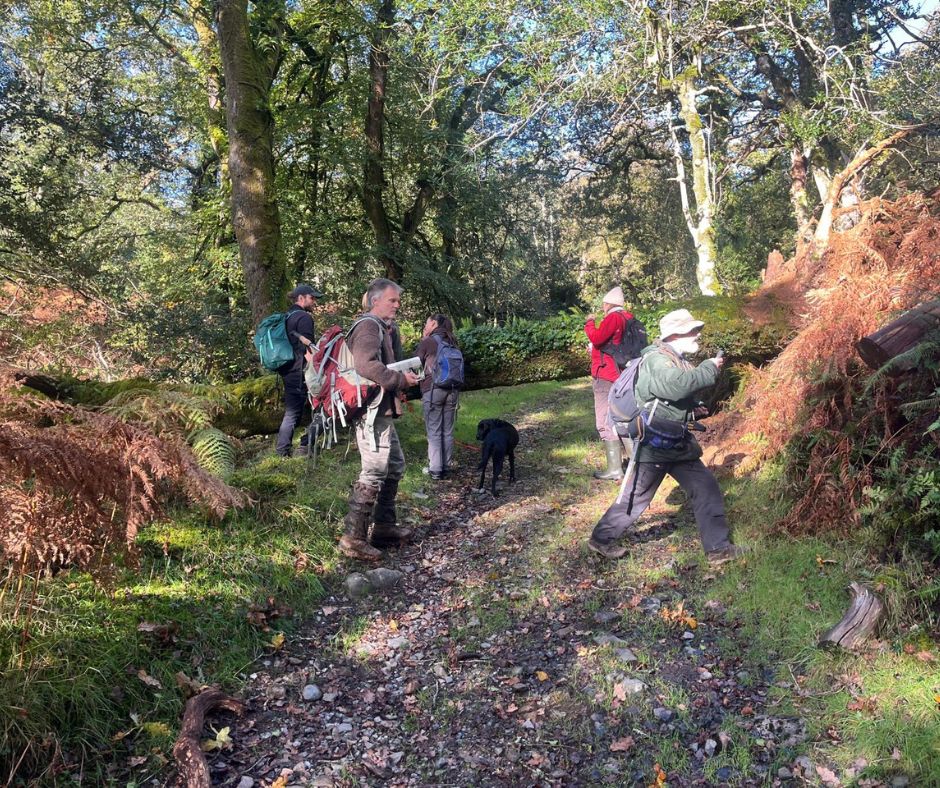
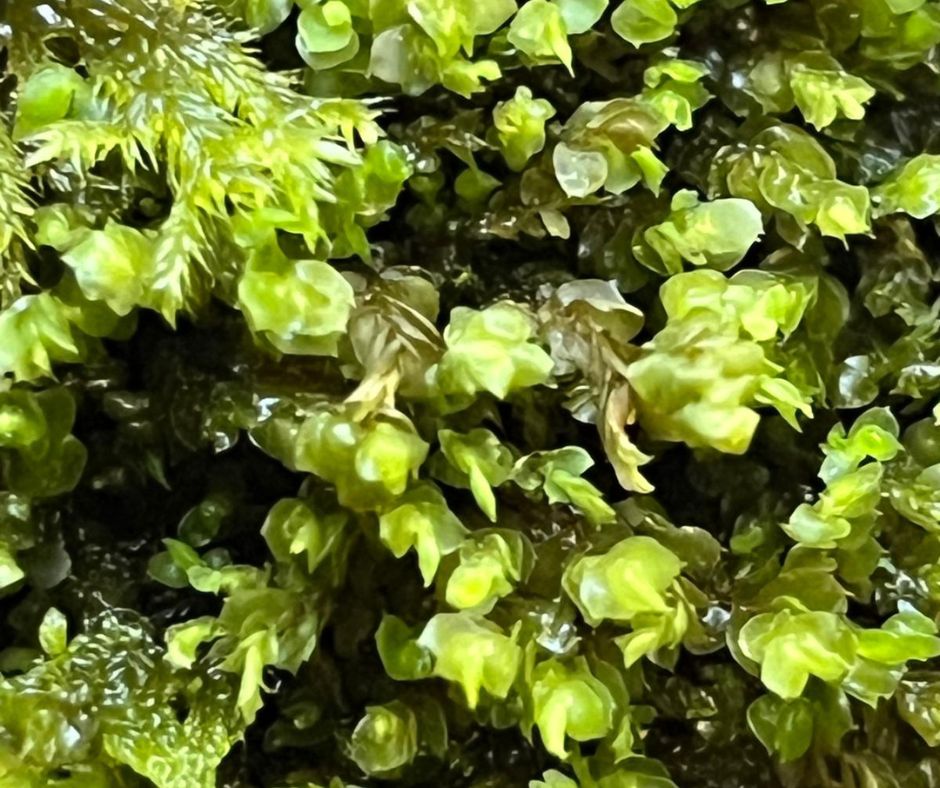
On the 16th of October Devon Bryophyte Group joined local DNPA ranger, the Natural England Senior Reserve Manager and Albert Knott for a visit to High House Waste and adjacent land in the river catchment. One of the aims was to visit the upper reaches of the Broadall Lake stream, which were not part of Sharon Pilkington’s earlier visit. The group were impressed by the presence, or interest, of bryophytes on willow dominated reaches. They also identified areas where possible management could be carried out, without affecting the interest. Joining the group for this visit was a lichen specialist, who backed up these early conclusions.
Another aim was to visit the main area of interest and see good examples of some of the special species which can be found on the site.
Ecological Consultant Albert Knott said: ‘Our trip was slightly hampered by a fallen tree across the main access track, but this gave us all a chance to look at bryophytes that are normally well above our heads. This meant we had a longer walk which was slow, owing to the species seen on route. Everyone (12 in total) though had an excellent day as we had good weather and access to water splashed areas.’
We will continue to monitor the spread and diversity of bryophyte species at High House Waste as part of our land management plans. Workdays take place at High House Waste throughout the year and our team of friendly conservation volunteers are always pleased to welcome new faces. Find a full list of upcoming workdays on our website.
Images: Albert Knott