


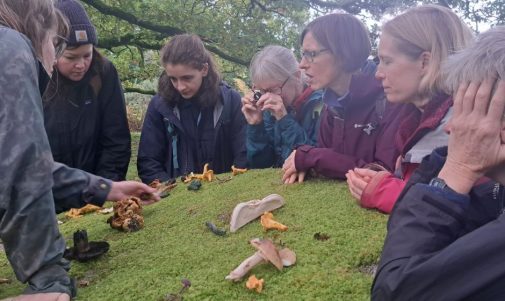
After a very dry summer, with drought conditions declared for much of England, the fungi of Dartmoor have been working to catch up. With the rain finally returning, both summer and autumn fruiting fungi have appeared in abundance in forests and fields, all of them racing to spread their spores before the first frost. We were very lucky to have local Medical Herbalist and Mycotherapist Jenny Carden join us for a partner walk, where she helped us search for, and identify, fungi.
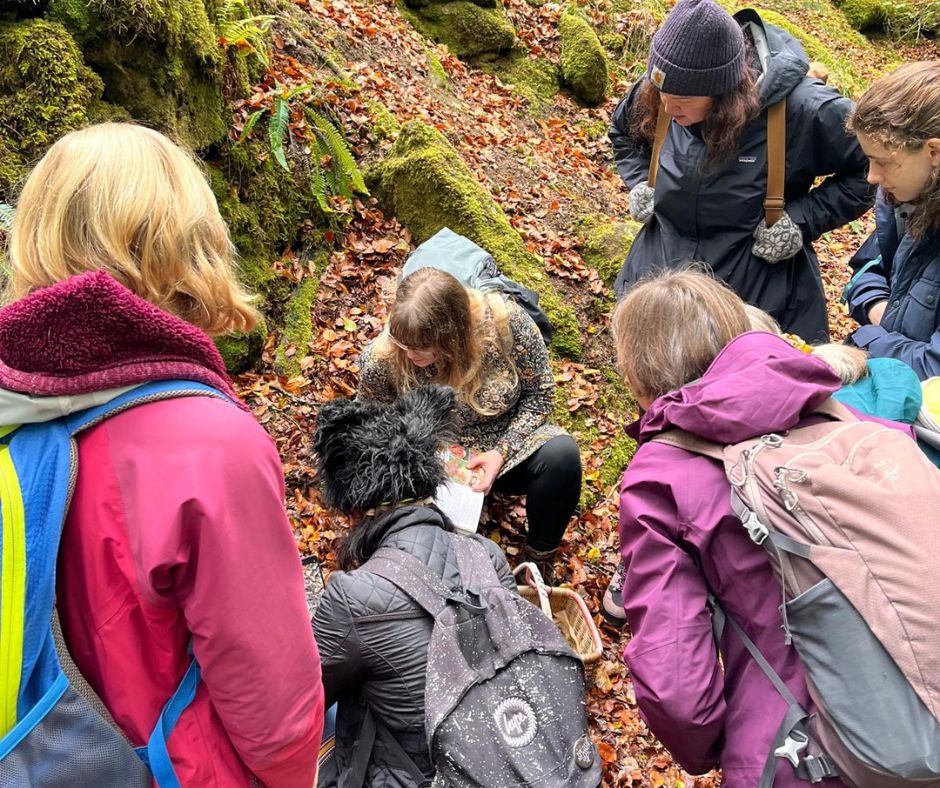
The walk met at Norsworthy Bridge carpark, with the numbers purposefully kept small at 9 attendees. This is due to the negative impact which trampling can have on fungi, as their mycelium spreads across the forest floor and can struggle when there is ongoing soil compaction. A recent study found that this had a more detrimental impact on fungi than picking, so we took care to spread out while we walked. Being an introductory session to Dartmoor’s fungi, we moved slowly through the woods, stopping to identify the bounty of mushrooms we found, with Jenny’s help.
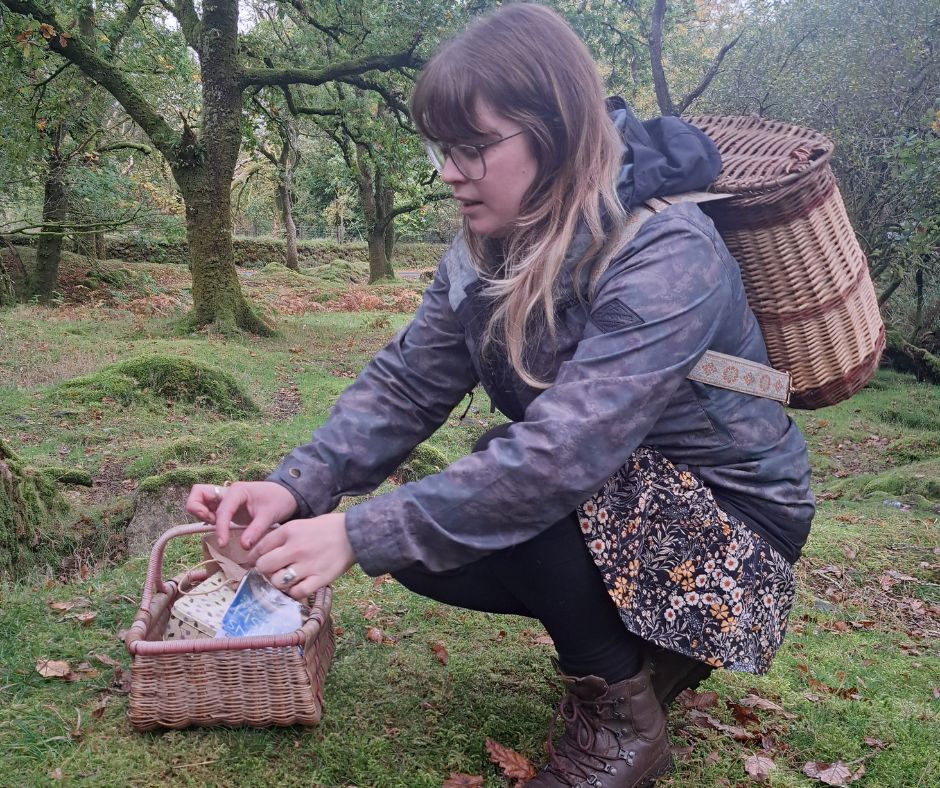
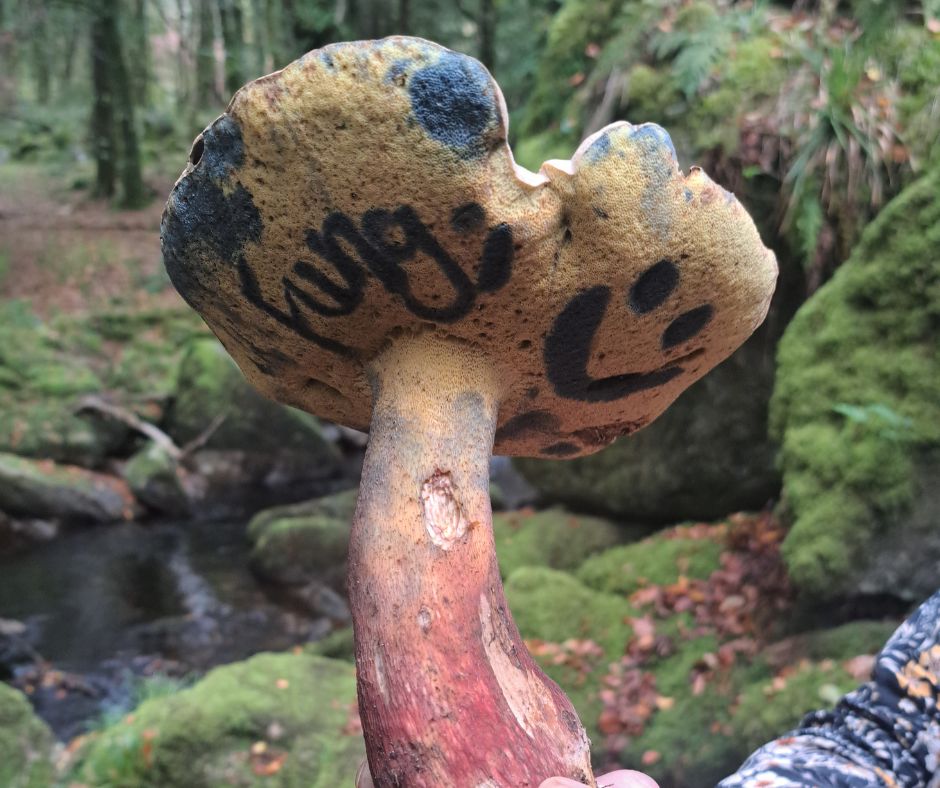
We found a range of Russula mushrooms on the forest floor, which come in a wide range of colours, including a pale red and a sooty purple variety, known as a charcoal burner. One way to help identify these types of mushroom is to try peeling back the skin, which comes away in various amounts, depending on the variety. Other mushrooms had the striking feature of bruising blue when touched.
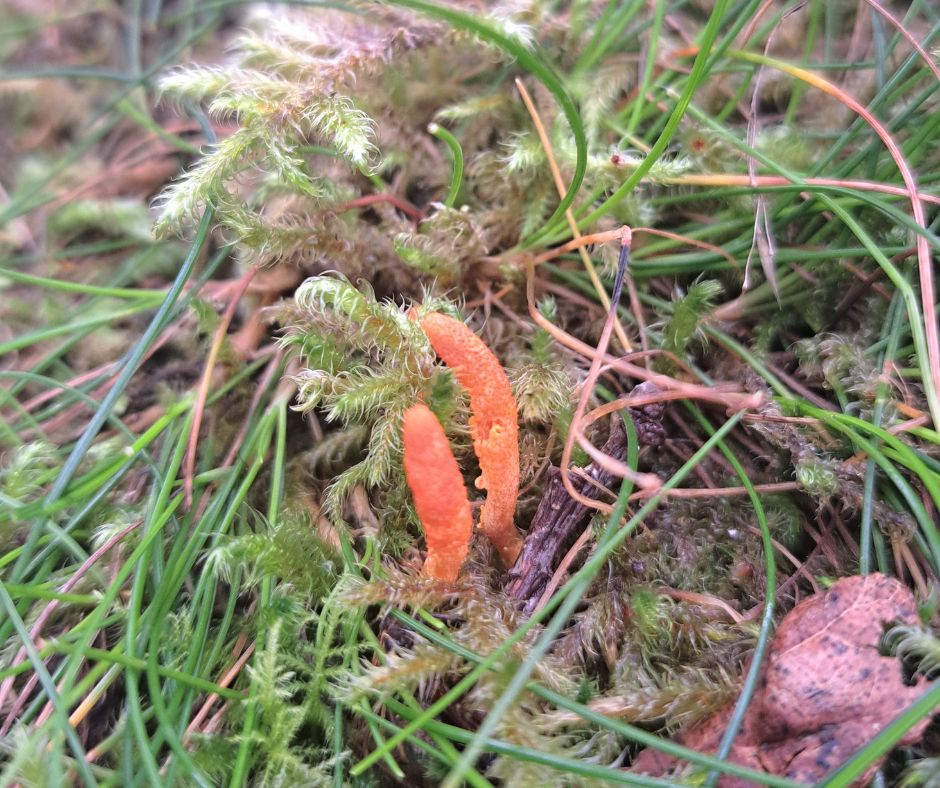
The tiny orange arms of the mushroom (above right) are cordyceps, which has a fascinating life cycle. It begins with the spores of this specialist fungi infecting an insect, in this case a moth caterpillar, which then buries itself in the leaf litter to pupate, but is instead consumed by the growing cordyceps fungus, which eventually produces fruiting bodies above ground, ready to begin the cycle again. Some types of cordyceps infect ants and beetles and ‘take over’ their bodies, directing them to climb to a high point to die, before bursting free of their bodies and releasing spores on the wind.
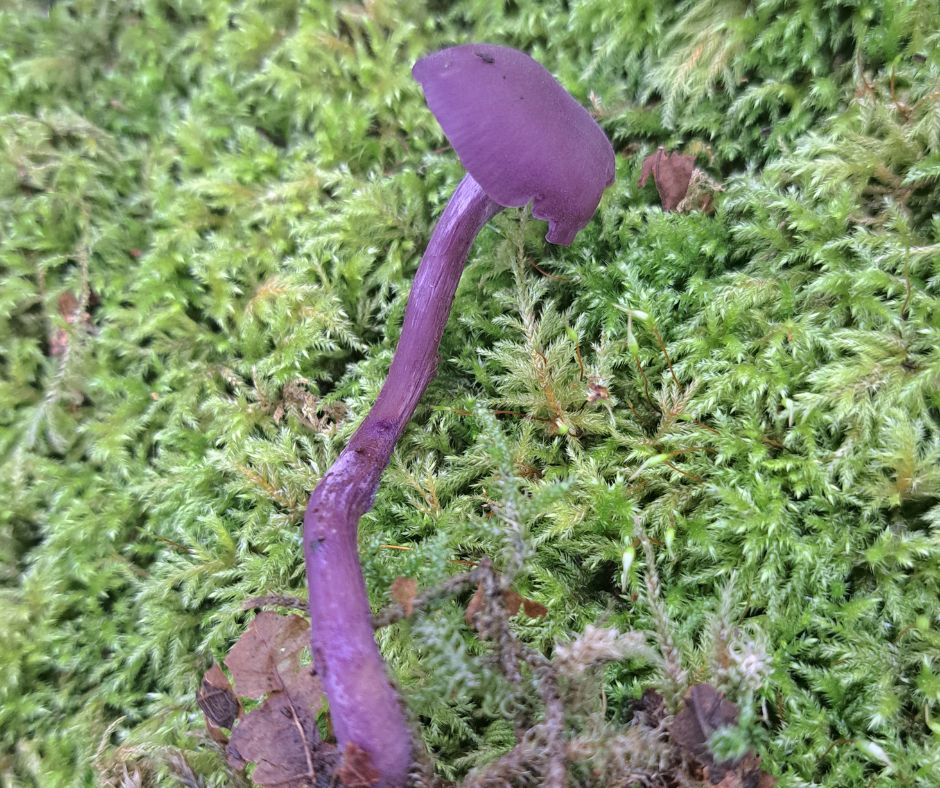
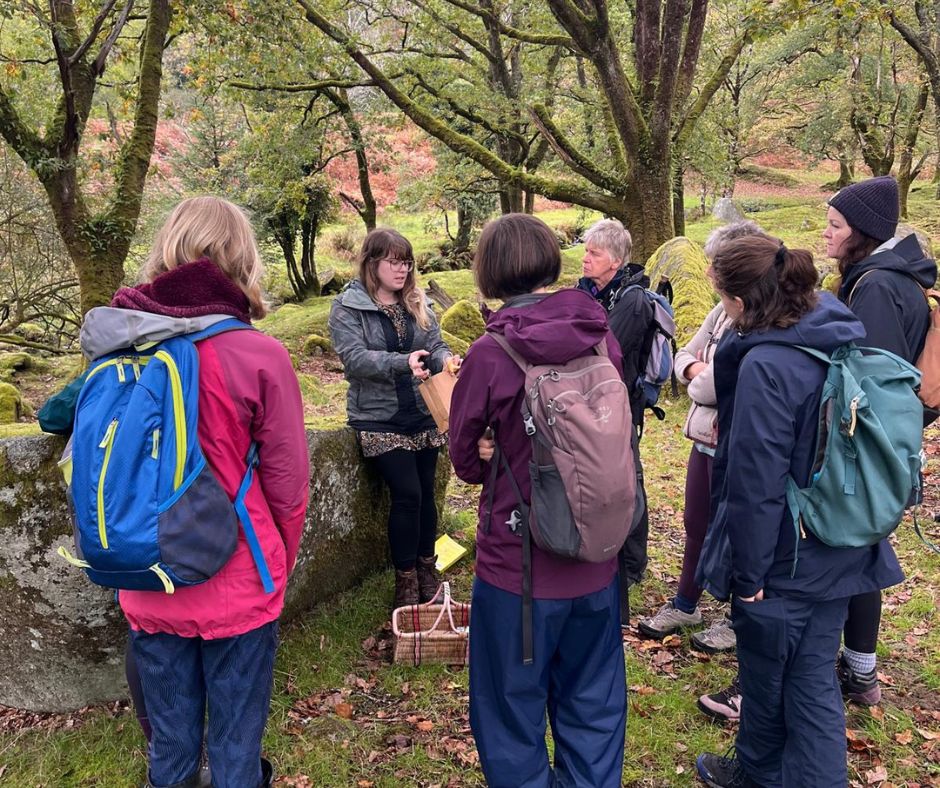
As part of the walk, we discussed how fungi have been traditionally used in Eastern and Western medicine, and how they are being used today to create mainstream anti-cancer treatments. Jenny uses many locally foraged mushrooms in her tinctures, and explained how some have powerful pain killing effects, while others can help to regulate the immune system. We also learnt how a black fungus, nicknamed ‘King Alfred’s Cakes‘ can be used to carry a smoldering piece of charcoal for hours, or even as a highly effective fire-lighter itself.
Many of the fungi we encountered were edible, although we talked at length about how some species can mimic others, such as in the case of chanterelles and false chanterelles. There can also be a broad range of colour and shape variation within species, so Jenny recommended carrying an illustrated guide out on walks if anyone wanted to become more confident with their identification. We were surprised to learn, especially given the abundance of fungi on the forest floor, that 60% of fungal activity in a forest is actually in the canopy, with strands of mycelium helping hold twigs to branches.
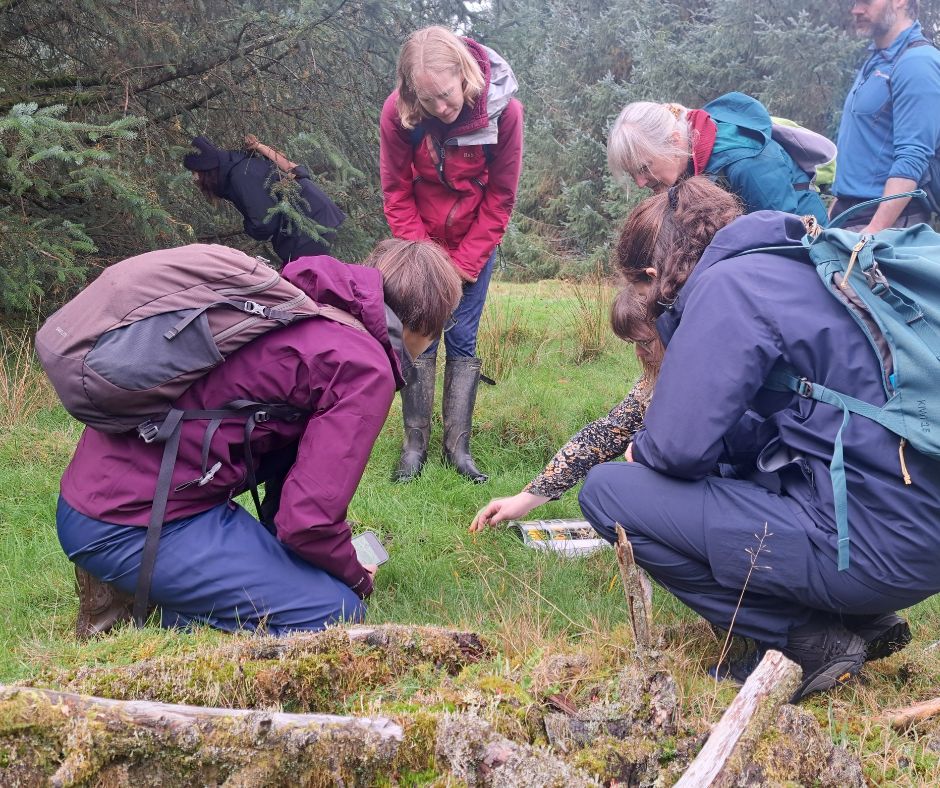
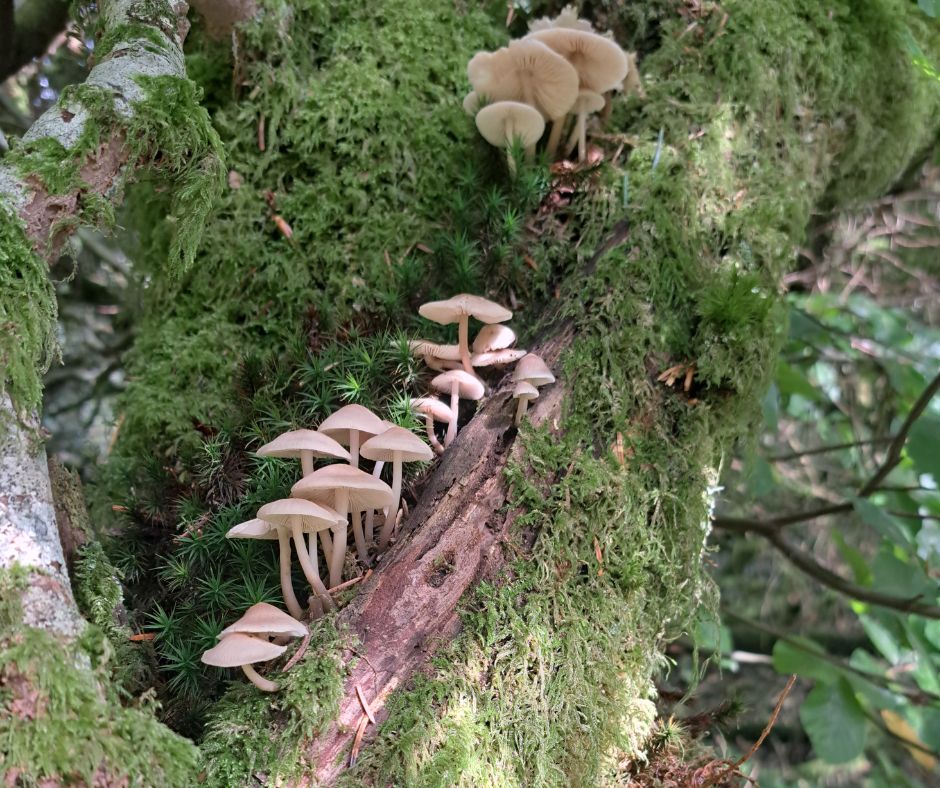
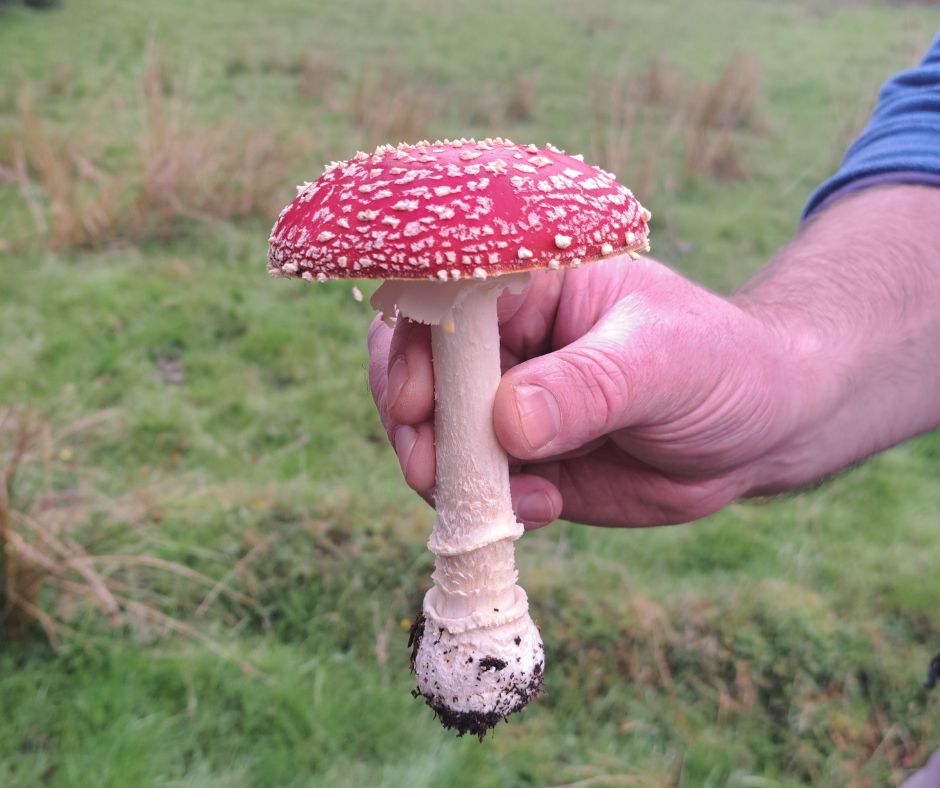
Many mushrooms could be found beneath the pine trees of the mature planation, with a particular abundance of striking red and white fly agaric. Jenny explained that deer often like to browse these mushrooms, so people may not be to blame when patches of them are knocked over. There were also smaller mushrooms sprouting from the trunks and lower branches of trees and we saw a few examples of ‘porcelain fungus,’ a delicate white, slightly translucent mushroom, which grows high up on the branches of beech trees.
Our group enjoyed our gentle fungi foray and we agreed that we could have spent the rest of the day in the forest! During our tea break, Jenny handed round some dried sample of ‘beef steak‘ mushroom for us to try, which had an intense, savoury flavour. While we paused to rest, Jenny shared that she would recommend fungi walks to anyone struggling with fatigue or conditions which cause low energy, as the movement is gentle but immensely beneficial, with the added boost of fresh air and time in nature.
The DPA run free partner walks, with a range of local experts, throughout the summer and autumn each year. These are open to both members and non members, and our full calendar up upcoming events can be found on our website.