


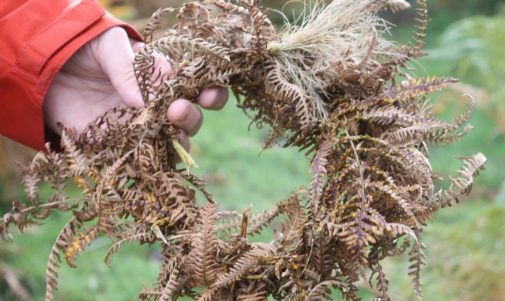
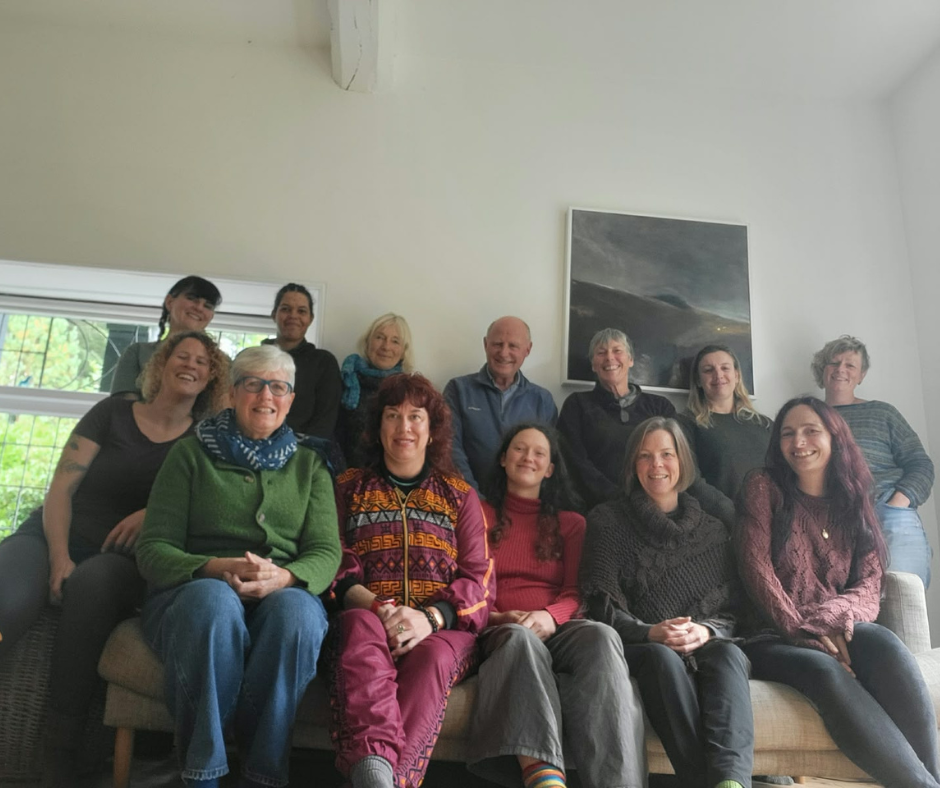
Celebrating a year of our fantastic Wild Words magazine being published, we collaborated with Moorland Guides to run a weekend residential for creatives in the heart of Dartmoor. The aim was to help creative activists, changemakers and storytellers to recharge and deepen their connection with the land. With Dartmoor firmly rooted in their practice, be that writing, art or movement, we hoped to empower them to inspire love and respect for this special landscape. Twelve people joined us at Karuna Retreat Centre in Widecombe-on-the-Moor, coming from both nearby and across the country.
During the weekend, participants had the chance to take part in a wild sounds walk with performance artist Avoca, an archaeobotany walk with medical herbalist Jenny Carden, sacred map making with author Helen Bruce, greenwood whittling with Nick Murphy and a complementary massage session with Jo Redwood. Everyone also enjoyed fresh homecooked meals, prepared each day by the onsite chef.
One participant shared: ‘This weekend I had the privilege to spend time on a writing retreat with @dartmoorpreservation run by the loveliest people in beautiful surroundings of the Karuna House on the edge of Widecombe-in-the-Moor. The leaders were excellent and hugely generous with their knowledge. The group was a beautiful collection of humans with their own unique talents and generosity of spirit. The moors were in full fat weather mode and I have some new words harvested for conjuring more poems. Thank you to all involved for a very special experience.’
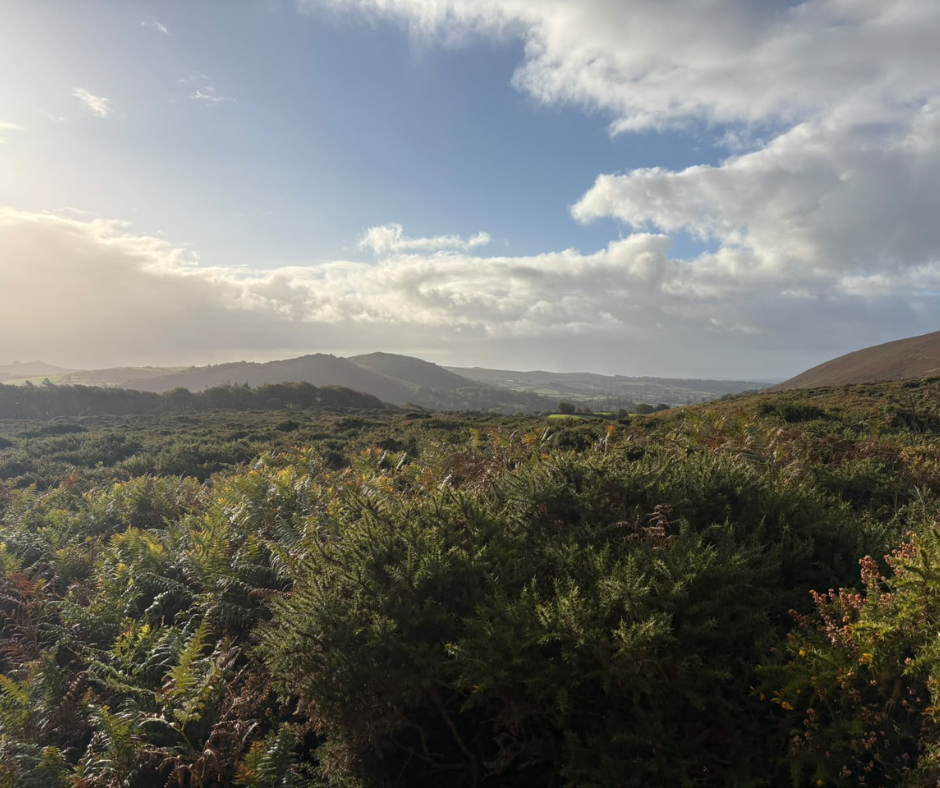
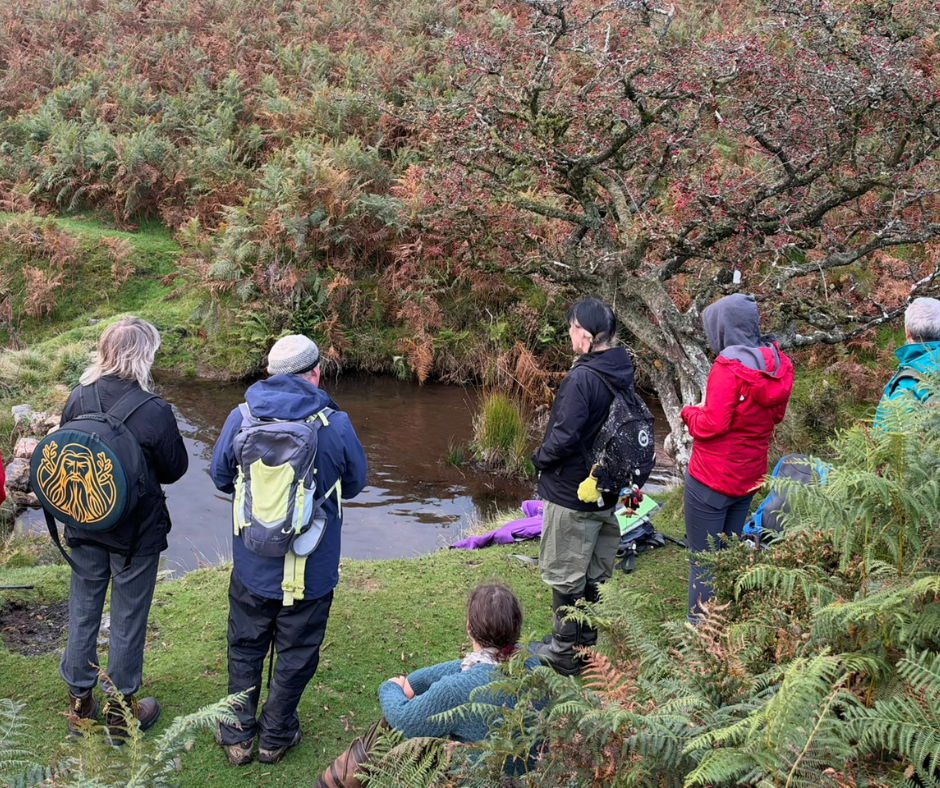
The Dartmoor weather was kind to us throughout the weekend and on the first day we walked to Berry Pound, a Bronze Age settlement that has similarities to Grimspound, but has not been restored in any way. Winding our way through the bracken, we found the stones of the pound wall, some of which had rolled downhill, due to the usually steep location. Taking in the grandeur of the landscape, we speculated as to why this spot had been chosen. Was it the nearby stream, providing vital water, or was it the significance of distant tors patterning the horizon? Sitting by a single, gnarled hawthorn tree, Avoca held space with a drum beat, inviting connection to the land with all our senses. We were amazed to notice that a patch of bark on the tree had been polished to a smooth sheen by the rubbing of animals and oils from their coats.
On our way back to Karuna, we stopped at the secret swimming spot. The water was low, due to the drought over the summer, but one of our group still braved a swim! Seeing how the water had been depleted, we sang our appreciation and well wishes to the stream, acknowledging that there must be balance when we take so much from the land, in the form of both inspiration and life essentials, like food and water. This concept of reciprocity with the land was a theme that ran through the whole weekend.
Back indoors, we began work on our sacred maps. The idea of these was to capture a creative impression of the walk we had been on, mapping out important landscape features that we connected with. It helped us to commit Berry Pound, the hawthorn tree and our swim spot deeply to memory and add notes about how we felt, what we heard and what we saw there. Not only does this practice invite people to slow down and notice more on their walks, but it creates a visual tool which anchors them to place, even if they can’t always get to Dartmoor physically. Each individual sacred map is deeply personal, capturing many layers of landscape that include: history, ecology, folklore, topography and sensorial experience.
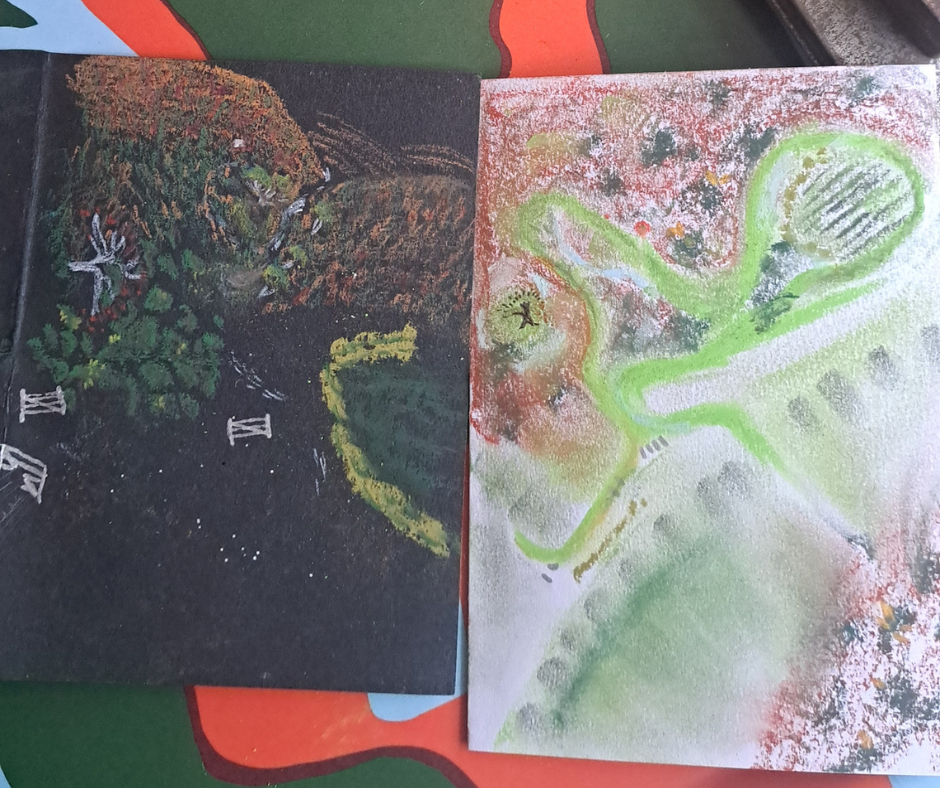
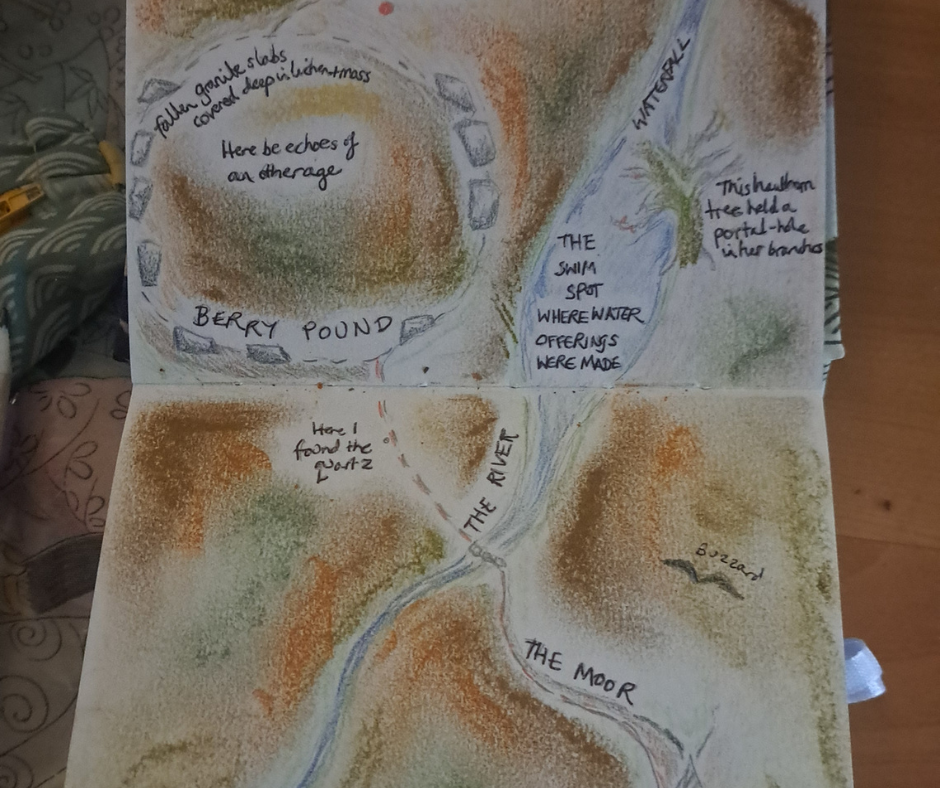
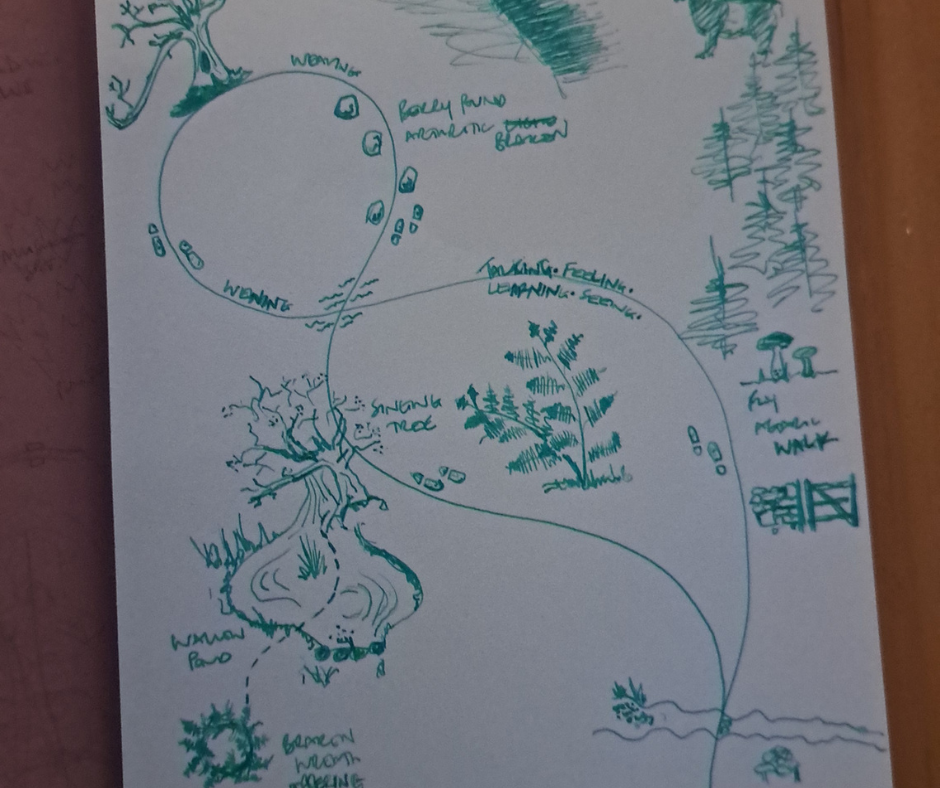
Another participant said: ‘I was touched by the thoughtfulness of everybody at the retreat. Sharing the time and space with other creative people was fantastic and it will be really interesting to see what comes out of it. I would definitely like to do another retreat in the future.’
On the Saturday afternoon participants had the chance to whittle a greenwood knife and benefit from a relaxing massage. A big aim of the residential was to create a spaciousness which was an antidote to the hectic pace of most of our day to day lives, so no activity was ever mandatory. It was wonderful to see the group sharing the awe they had experienced out on the moors and talking about their hopes for their own creative practice. People who had never visited Dartmoor before were already expressing a desire to return and bring their families.
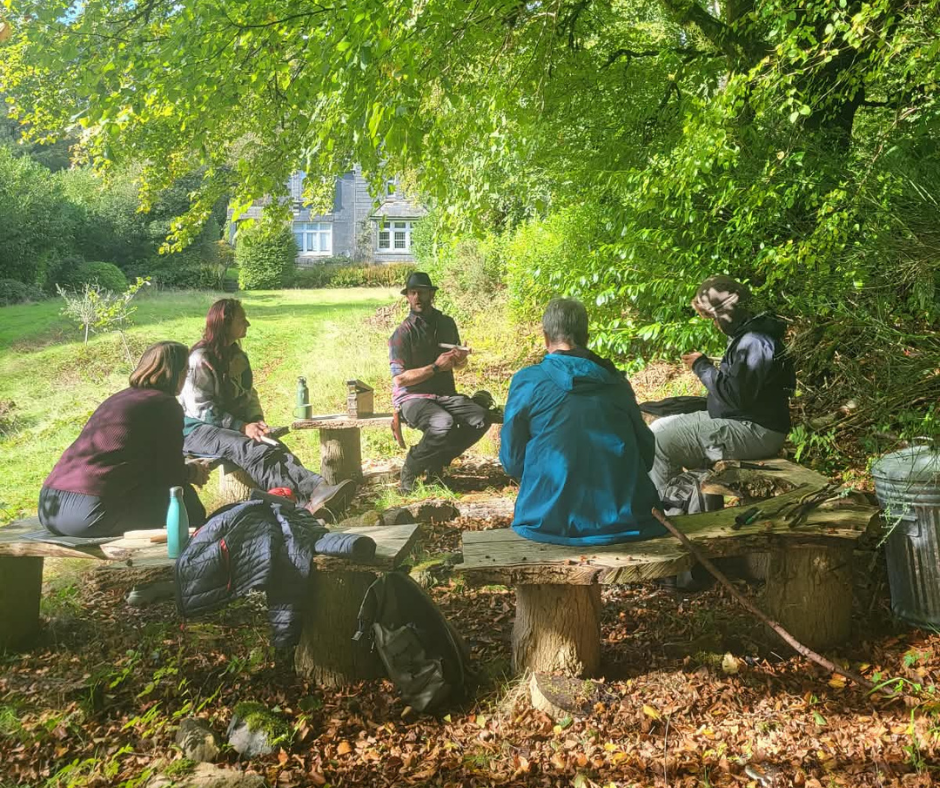
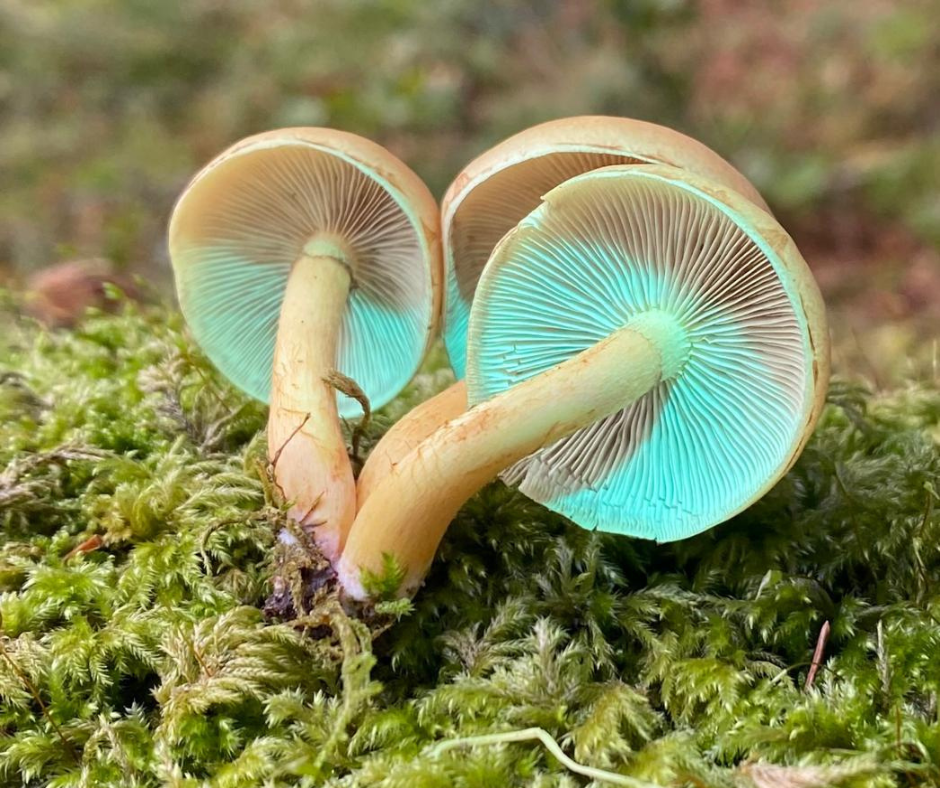
On Sunday we explored the forest with Jenny Carden and, with so many fungi putting on a show, our attention was naturally drawn to these. Jenny expertly shared the historical and medical uses of some of these fascinating mushrooms, which we learned are actually more closely related to humans than green plants! Some even glowed under a UV light and Jenny told us that these would be luminous beacons to beetles in a night time forest, ensuring that the mushrooms got eaten, spreading fungi spores to populate new areas of forest.
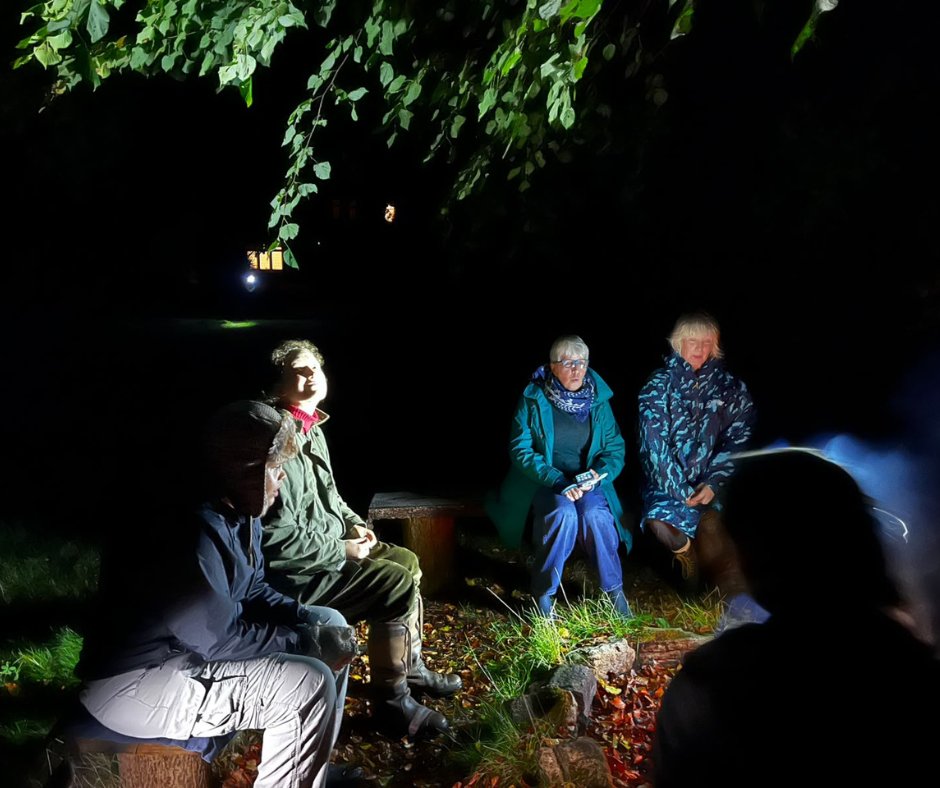
A participant said: ‘Thank you. It felt very caring and supportive and I got a lot from the weekend. The option to join in or not was great and the space was perfect for finding a quiet corner or sitting chatting with a group. The introductions to each other around the campfire were great as it was dark and there was a fire to focus on, it felt less daunting to talk in front of strangers. I thought that was genius as its always the thing I find really hard.’
The DPA are delighted to have worked with Moorland Guides to offer this residential at cost price, and with partially funded places, making it accessible for creatives who may have encountered financial barriers to similar opportunities. We hope that the themes of connection, respect and reciprocity continue to inform and shape creative work, reaching people who are ready for their first encounter with Dartmoor. Just as the land has shaped culture and stories, a culture of stewardship promotes care and advocacy for this special national park.
Top image: Bracken wreath offering, courtesy of Mary-Ella