


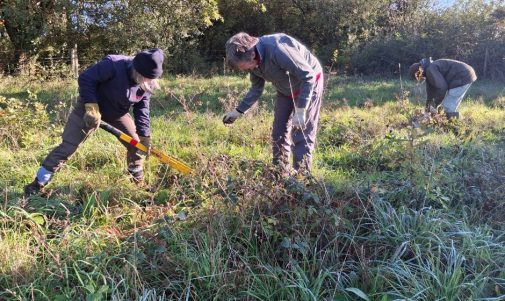
Autumn is a season of abundance in Pudsham Hay Meadows, with the hedgerows full of berries and the various grasses and herbs dispersing seeds from dried seed heads. Following on from our bracken cut and rake, in the late summer, it is now time to prepare the land for our annual visit from Dartmoor ponies. For our October workday, the focus was on pushing back scrub edges and invasive sapling removal.
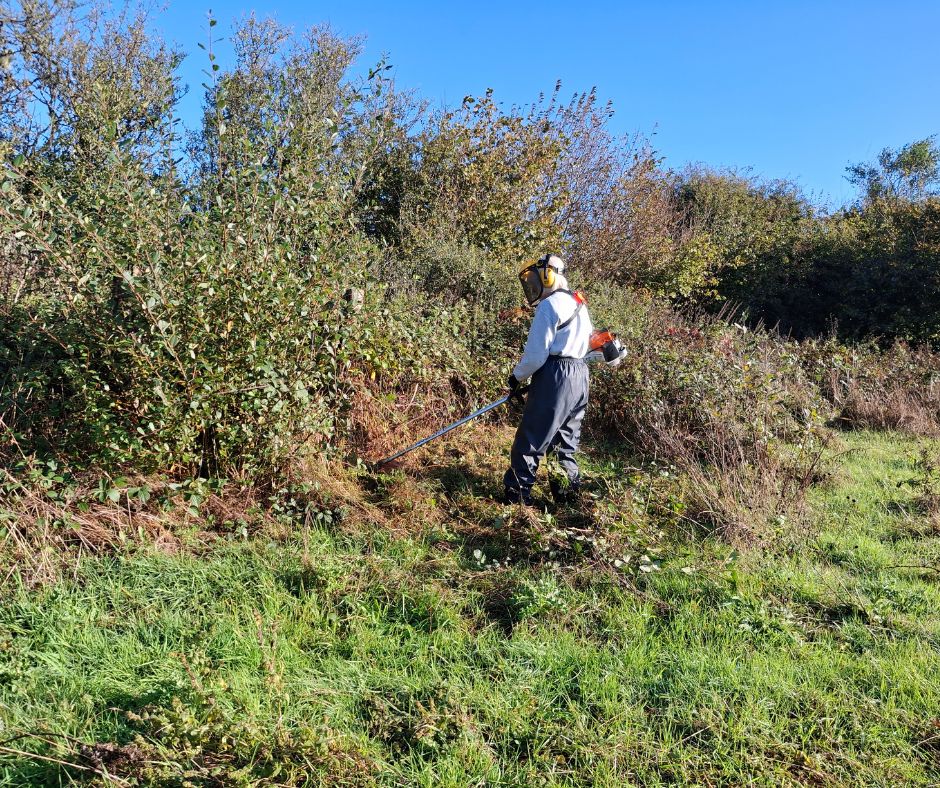
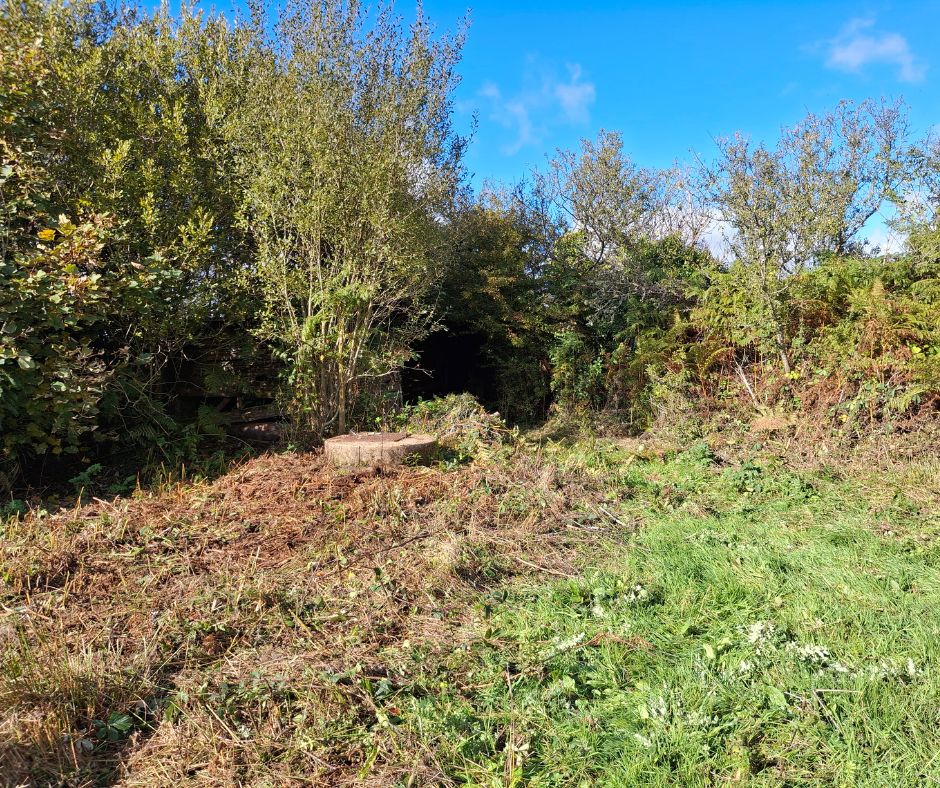
Using strimmers, volunteers trimmed back thick bramble, which was beginning to encroach onto the meadow from the edges of the two larger fields. This will allow more light to the meadow edges, increasing habitat for flowering herbs and native orchids. Some bramble was left at the very edges, as it offers useful habitat for small mammals and birds, who can hide from predators in the tangle and also feed on the berries in the autumn. Pushing back the bramble had the added bonus of uncovering our field shelter in Sylvia’s field, which the ponies are sure to appreciate on the wettest days.
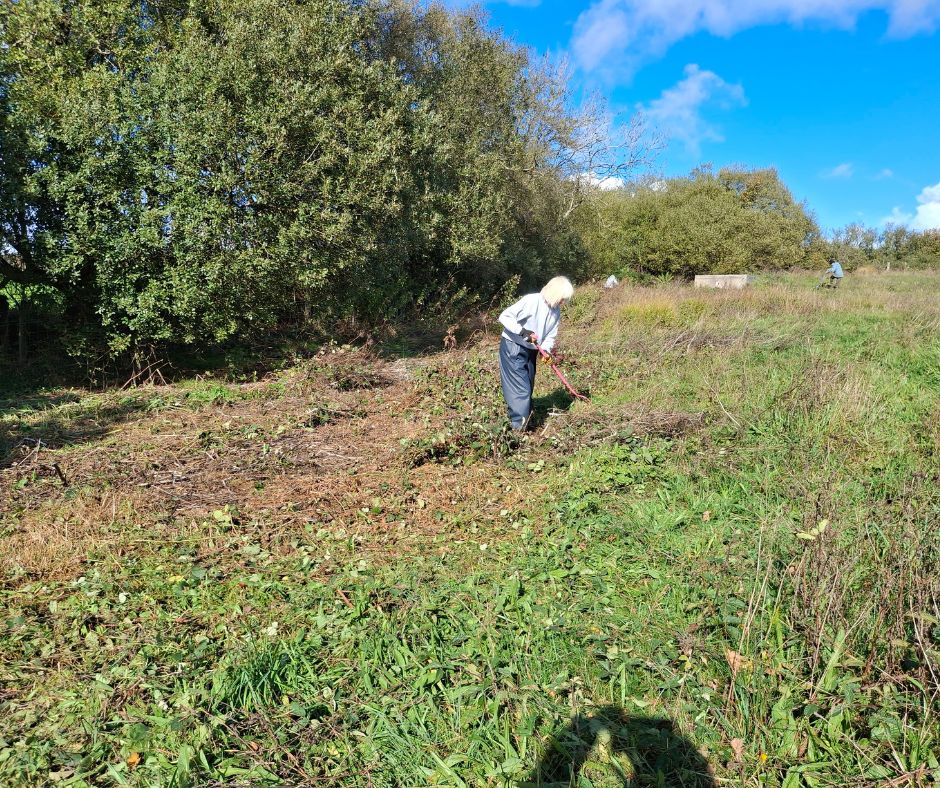
Workday co-ordinator, Sylvia Hamilton, said: ‘The volunteers quite like using the sapling pullers as it is satisfying to get them up by the roots. Judging by the large pile of removed material, there are now a lot less saplings in the fields.’
It may seem counter-productive to remove native saplings, but the huge underground root network of blackthorn can send up numerous stems over a large area. If left unchecked, these would quickly close in the meadow and eradicate this rare habitat. Blackthorn offers aerial walkways and food for Hazel Dormice, Wood Mice and others, when maintained as part of a healthy hedgerow. Alongside this, it provides early spring nectar and pollen for bees and is the food plant of various moths and the caterpillars of the Brown Hairstreak butterfly. This butterfly has suffered a decline in recent years, as it lays its eggs on young blackthorn shoots, which are destroyed when blackthorn is managed through yearly flailing. Hence, removing suckers by hand, and allowing the parent plant to grow undisturbed in the hedgerow, is a gentler form of management.
Grazing from our visiting ponies will continue this work, as they will trample and graze any further small saplings in the grass, with these being a natural part of their diet. Their droppings will also go on to enrich the meadows over the winter and their movement will aid in the spread of seeds.
We run year round workdays on our land and are always delighted to have new people join our team of enthusiastic volunteers. There are a range of jobs, suitable for a range of levels of fitness and ability, and all equipment and training is provided. Fancy joining us in taking care of these beautiful meadows? Find a full list of upcoming workdays on our website.
Images: Sylvia Hamilton